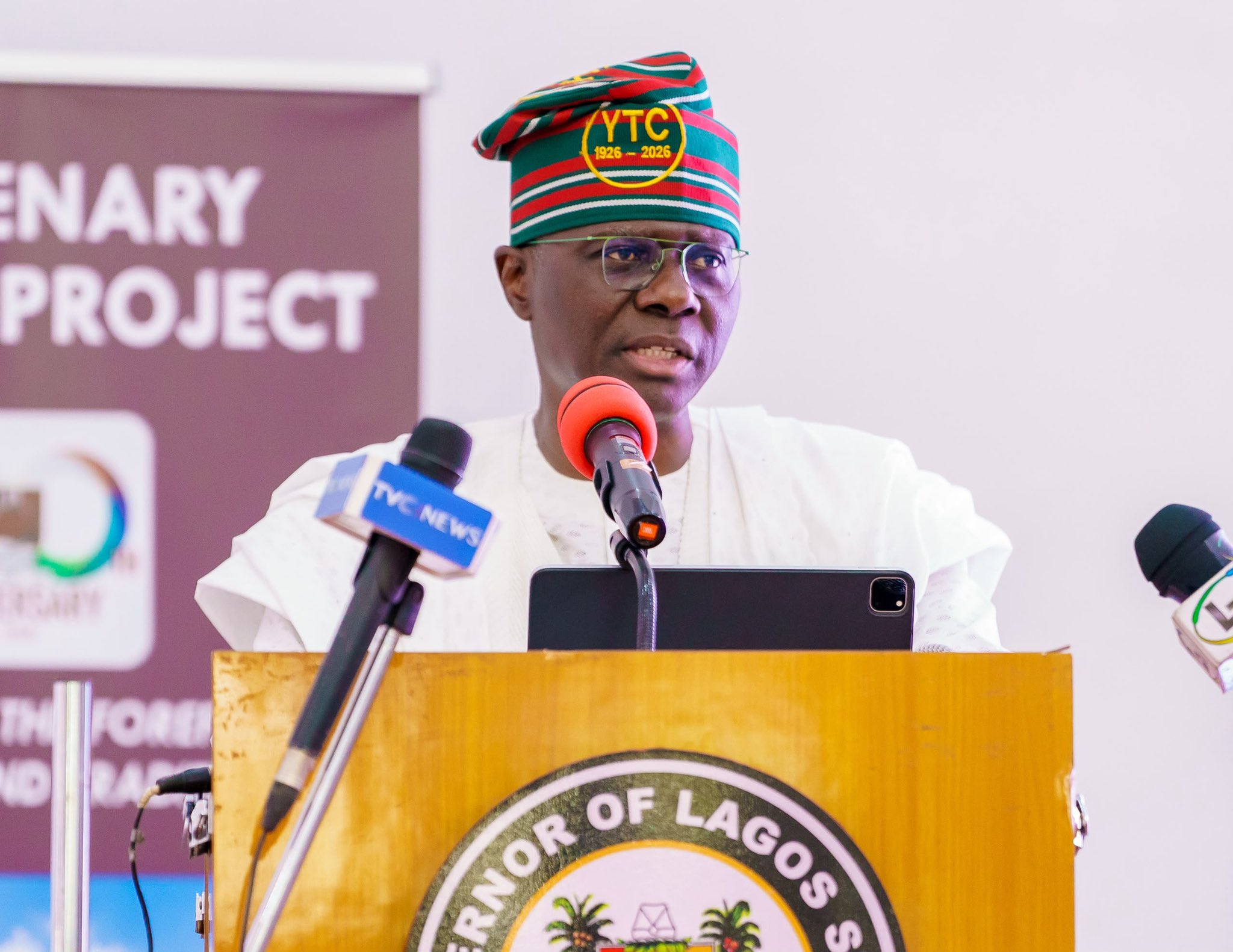
Lagos State Governor Babajide Sanwo-Olu has challenged opposition parties to present credible alternatives to the ruling All Progressives Congress (APC), rather than seeking change for the sake of it.
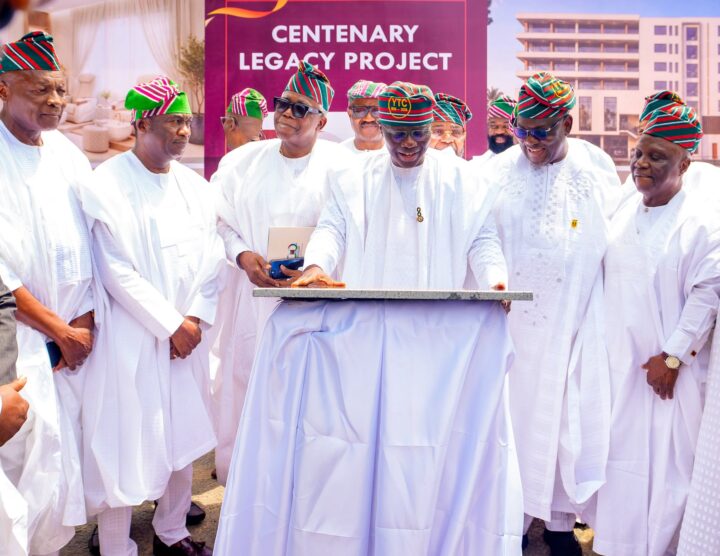
Sanwo-Olu spoke while delivering a lecture as part of the centenary anniversary of the Yoruba Tennis Club in Onikan, Lagos.
Some weeks ago, Akwa Ibom State Governor Umoh Eno delivered another lecture in the series.
Sanwo-Olu’s lecture was titled: “Democracy, governance and the Lagos spirit: A century of excellence.”
The governor, who is the Southwest Zonal Coordinator of the APC Presidential Campaign Council, said Lagos had benefited from continuity in governance, arguing that any attempt to disrupt the trajectory without a credible alternative would be counterproductive.
He said: “We must keep insisting that it cannot be changed merely for the sake of change. We must never think we need to tear things up just to prove that we are in control.
“This is the message that I am taking into the political campaign, as my party strives to build on our legacy of transformation in Lagos State.
“Our challenge to the opposition remains the same – to put forward credible ideas that can compete with ours, instead of seeking change for the sake of change.
“Untested novelty is no longer an option for a Lagos State that has tasted and felt the superiority of continuity.”
Sanwo-Olu said the “Lagos Spirit” of courage, self-reliance, openness and continuous improvement had shaped the state’s democratic tradition and development over the years.
He recalled Lagos’ role in the June 12 pro-democracy struggle, its history of civic activism and the development of indigenous political institutions.
According to him, the state’s development since the return of democracy in 1999 had been driven by continuity, with successive administrations building on the blueprint initiated by former Governor Bola Tinubu, now President.
“The Lagos Spirit is the spirit of a city that does not wait to be given. In 1926, it was shut out of the colonial clubs, so it built its own, and a better one.
“In 1993, a free and fair presidential vote was stolen, so Lagos chose to lead the march to the streets and into the pro-democracy trenches.
“In 2004, its constitutionally allotted allocation was illegally withheld by the then Federal Government, so it decided to make its own money.
“Every time a gate has been closed to Lagos, Lagos has built a house across the road and thrown a better party,” he said.
The governor identified four principles underpinning what he described as the “Lagos Playbook” for governance – vision, self-reliance, partnership and measuring governance by its impact on ordinary citizens.
He said the development blueprint produced in 1999 had remained the foundation for successive administrations, noting that major projects such as the Blue and Red rail lines were products of continuity.
Sanwo-Olu also cited the state’s internally generated revenue reforms as an example of self-reliance, saying Lagos had become less dependent on federation account allocations.
On partnership, he said the founders of the Yoruba Tennis Club demonstrated the principle by raising funds themselves to establish the club after being excluded from colonial clubs.
The governor said governance must ultimately be measured by its impact on residents.
“The true measure of our work in Lagos is whether a doctor or nurse in Alimosho or Ibeju-Lekki can get to work on time, whether a child in Ajegunle has a desk and school books, whether a trader in Mile 12 can get her tomatoes or fish to market before they rot,” he said.
Speaking on his administration’s seven-year performance, Sanwo-Olu said the government’s THEMES Plus agenda had produced interventions across transportation, health, education, technology, the economy, tourism, security and governance.
He listed the establishment of two public universities, the Imota Rice Mill, investments in submarine cable landings and data centres, the construction of a children’s hospital and the Lagos Central Food Security System and Logistics Hub in Ketu-Ereyun among the projects undertaken by his administration.
The governor said the food hub was designed to support the state’s food market by improving aggregation, storage, processing and distribution.
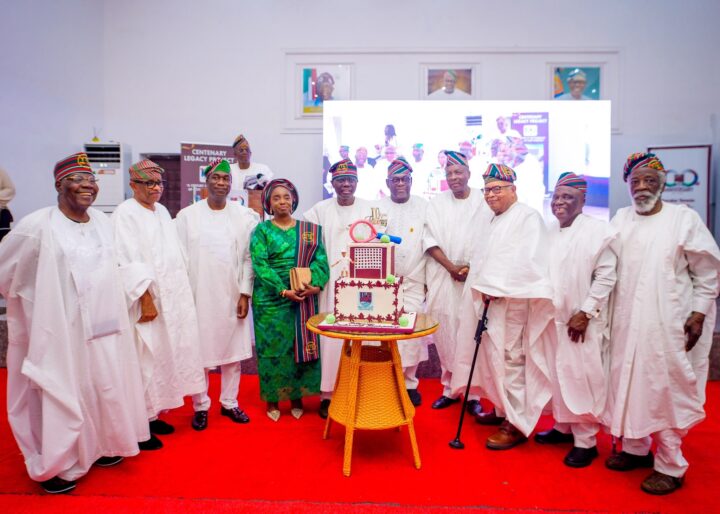
On the centenary of the Yoruba Tennis Club, Sanwo-Olu described its establishment as a response by indigenous Lagosians to racial segregation during the colonial era.
He urged the club to preserve its founding values while adapting to changing times.
He also called for greater involvement of young people, better documentation of the club’s history and strict standards in admitting new members.
The chairman of the Yoruba Tennis Club, Chief Olawunmi Gasper, reaffirmed the club’s commitment to preserving cultural heritage, promoting fellowship and contributing to the social, economic and civic development of Lagos.