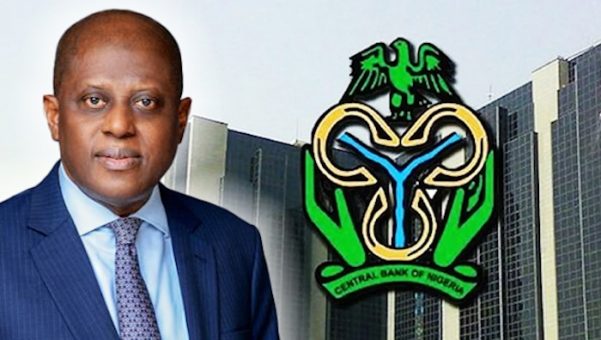
The Central Bank of Nigeria (CBN) has unveiled its 2026 monetary policy agenda, focusing on reducing inflation to single digits, stabilising the exchange rate, and strengthening the country’s financial system.
Governor of the apex bank, Olayemi Cardoso, announced the plan on Thursday in Abuja at the 2026 First Monetary Policy Forum.
Cardoso said the Monetary Policy Committee will concentrate on consolidating recent economic gains by ensuring inflation continues to decline while maintaining exchange rate stability and improving fund flow within the banking system.
“Our next phase is focused on consolidation: anchoring inflation firmly on a downward trajectory toward a single-digit level, sustaining exchange-rate stability, strengthening reserve buffers through organic inflows, deepening interbank market development, and enhancing the robustness of our monetary-policy transmission,” he said.
He explained that achieving these objectives depends on strong cooperation between the Central Bank and fiscal authorities, as well as disciplined implementation of policies and active engagement with stakeholders.
“Achieving these goals requires continued collaboration with the fiscal authority, disciplined policy execution, and strong stakeholder engagement, which is the very essence of today’s Forum,” Cardoso added.
The CBN governor said the outlook for the economy remains cautiously optimistic, although risks still exist both within and outside the country. He noted that global growth is expected to be about 3.3 per cent in 2026, but this could be affected by tight financial conditions, past monetary tightening, and geopolitical tensions.
He warned that developments in the Middle East could pose a serious risk to Nigeria’s economy due to their effect on oil prices.
On the domestic front, Cardoso projected economic growth at 4.49 per cent, supported by consistent policies, a market-driven foreign exchange system, improved oil production, and ongoing reforms.
He, however, pointed out that challenges such as food supply issues, poor infrastructure, and spending related to the election cycle could create pressure on the economy.
“Notwithstanding these challenges, our strengthened macroeconomic fundamentals, improved fiscal-monetary coordination, credible policy frameworks, and sound early warning systems position Nigeria to mitigate these risks more effectively than in the past,” he said.
In his goodwill message, Minister of Finance and Coordinating Minister of the Economy, Wale Edun, said the federal government is aiming for stronger economic growth that can improve the lives of Nigerians.
“Our broader objective remains economic transformation. In the near term, we are targeting GDP growth of about 7 per cent—roughly double the pace of inflation. Growth at that level would be strong enough to lift millions of Nigerians out of poverty,” Edun said.
He explained that managing the balance between inflation and growth would remain a key concern for policymakers.
“The relationship between growth and inflation will remain a key focus going forward. The challenge is to strike the right balance—keeping inflation under control while sustaining growth,” he said, noting that similar situations have occurred in other economies, including the United States after the COVID-19 period.
Edun also explained that interest rates are an important tool for controlling inflation, as higher rates increase borrowing costs for the government, businesses, and households. He added that as inflation begins to fall and reforms take effect, interest rates may gradually decline.
He stressed that achieving a stable economy requires cooperation across different institutions, noting that no single agency can deliver macroeconomic stability on its own.
The minister welcomed ongoing efforts to improve transparency in the foreign exchange market, saying such steps would boost confidence, reduce uncertainty, and support lower inflation.
He also commended the Central Bank’s move toward an inflation-targeting framework, describing it as an important step that will improve policy credibility, communication, and transparency, while supporting long-term investment and economic growth.
Also speaking at the forum, Deputy Governor, Economic Policy Directorate at the CBN, Mohammed Sani Abdullahi, said Nigeria’s economic environment has improved since the last Monetary Policy Forum held in January 2025.
He said inflation has slowed, conditions in the foreign exchange market have improved, and investor confidence has strengthened, supported by better coordination between fiscal and monetary authorities.
“Despite these encouraging developments, we recognize that the journey towards sustainable macroeconomic stability is an ongoing process rather than a destination,” Abdullahi said.
He called for sustained reforms, stronger policy coordination, and deeper engagement between policymakers and stakeholders across the economy.
According to him, the theme of the 2026 forum reflects the idea that maintaining a stable economy is a shared responsibility, as the effectiveness of monetary policy depends on the actions of various players in the economy.
Abdullahi urged participants at the forum to contribute actively to discussions, noting that feedback from stakeholders is important in shaping policies that will support economic stability and growth.